A new five-volume survey, Worlds Unfolding: Science on the Page, opens The Huntington’s archives to reveal how breakthroughs in science, medicine, and technology have been recorded and imagined over centuries. Published by Princeton University Press and featuring more than 625 illustrations, the set includes an introduction by engineer and PBS personality Bill Nye and is rooted in The Huntington in San Marino, California.
Pages that map discovery
Compiled by Jennifer A. Watts, Daniel Lewis, Joel A. Klein, and Natalie Lawler, Worlds Unfolding spans the 10th century to today, threading together research papers, natural history volumes, photographs, and ephemera. A statement captures the book’s guiding spirit: “Across centuries of trial and error, illusion and triumph, the history of science is a continuously unfolding quest.”
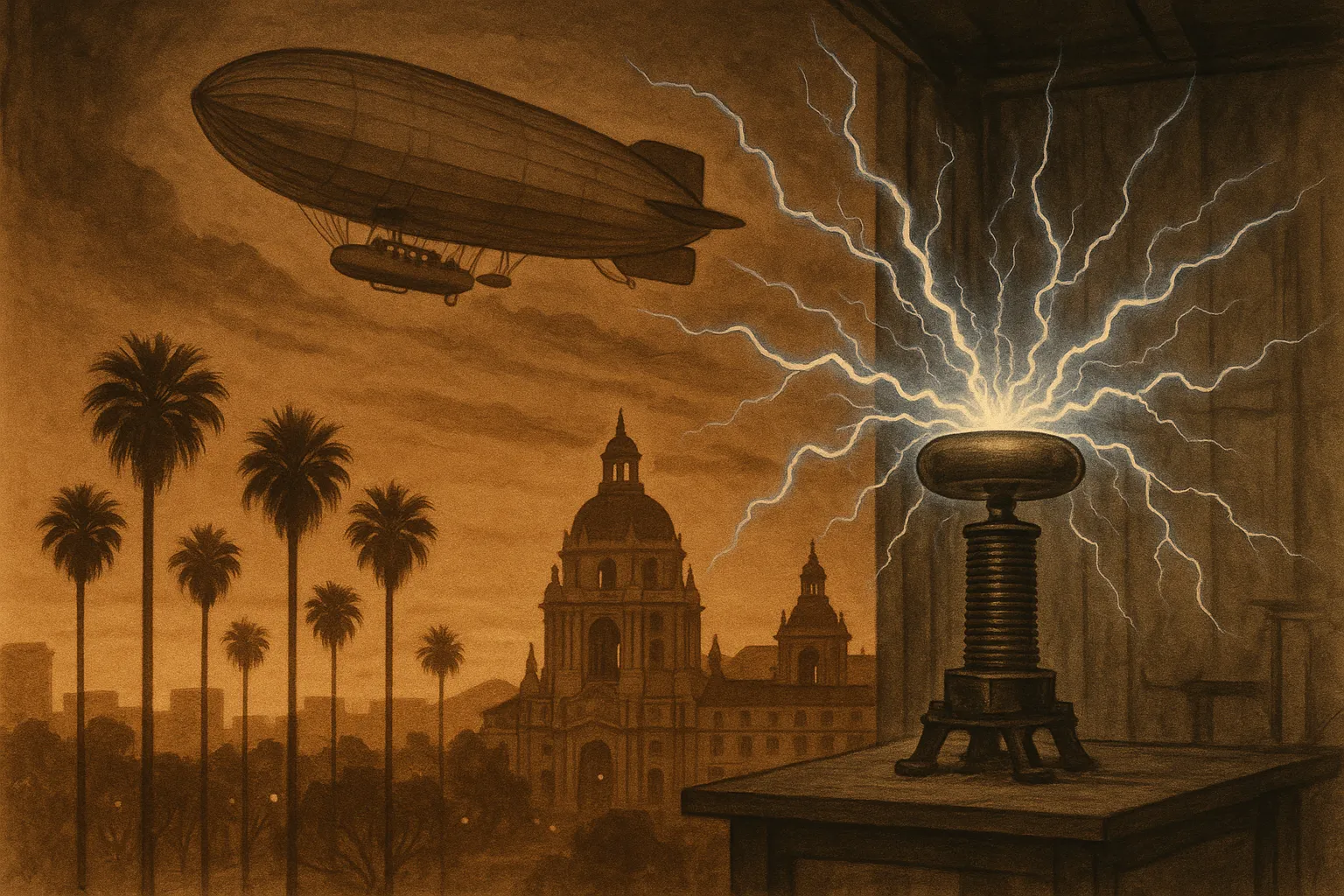
Among its standout images, readers will encounter Ruth Rowland Nichols beside her Lockheed Vega in 1931, a year she became the first woman to hold simultaneous international records in altitude, speed, and long distance. A double-exposure photograph of Nikola Tesla with an active Tesla coil at the Colorado Springs Experimental Station (1899), by Dickenson V. Alley, appears courtesy of the Burndy Library collection, while Eadweard Muybridge’s early motion studies, including The Attitudes of Animals in Motion (1881), mark the first time photographic methods were used to essentially record the passage of time.
- Gautier D’Agoty’s plates from Myologie complette en couleur et grandeur naturelle (1746–48), courtesy of the Los Angeles County Medical Association
- Sarah Bowdich Lee’s The Fresh-Water Fishes of Great Britain (1828)
- A color-enhanced image of Saturn’s Northern Temperate Belt (1980) from Voyager 1, drawn from the Albert R. Hibbs papers
- “Astronaut Test Flies EVA Self-Rescue Device,” courtesy of The Planetary Society records
- Roy Knabenshue’s passenger dirigible taking off over Pasadena, California (c. 1913), from the Roy Knabenshue scrapbook
- Ruth Nichols next to New Cincinnati, her Lockheed Vega (1931), from the Harvey C. Christen papers
Five volumes, one unfolding story
The slipcased set is organized into individual volumes titled Above, Below, Within, Beyond, and Alive, framing subjects from aeronautic engineering and electricity to natural history, geology, space, and more. Worlds Unfolding will be released on October 10.
Together, these pages surface how curiosity has been inscribed—through diagrams, photographs, and field notes—so that the pursuit of knowledge remains legible across time.