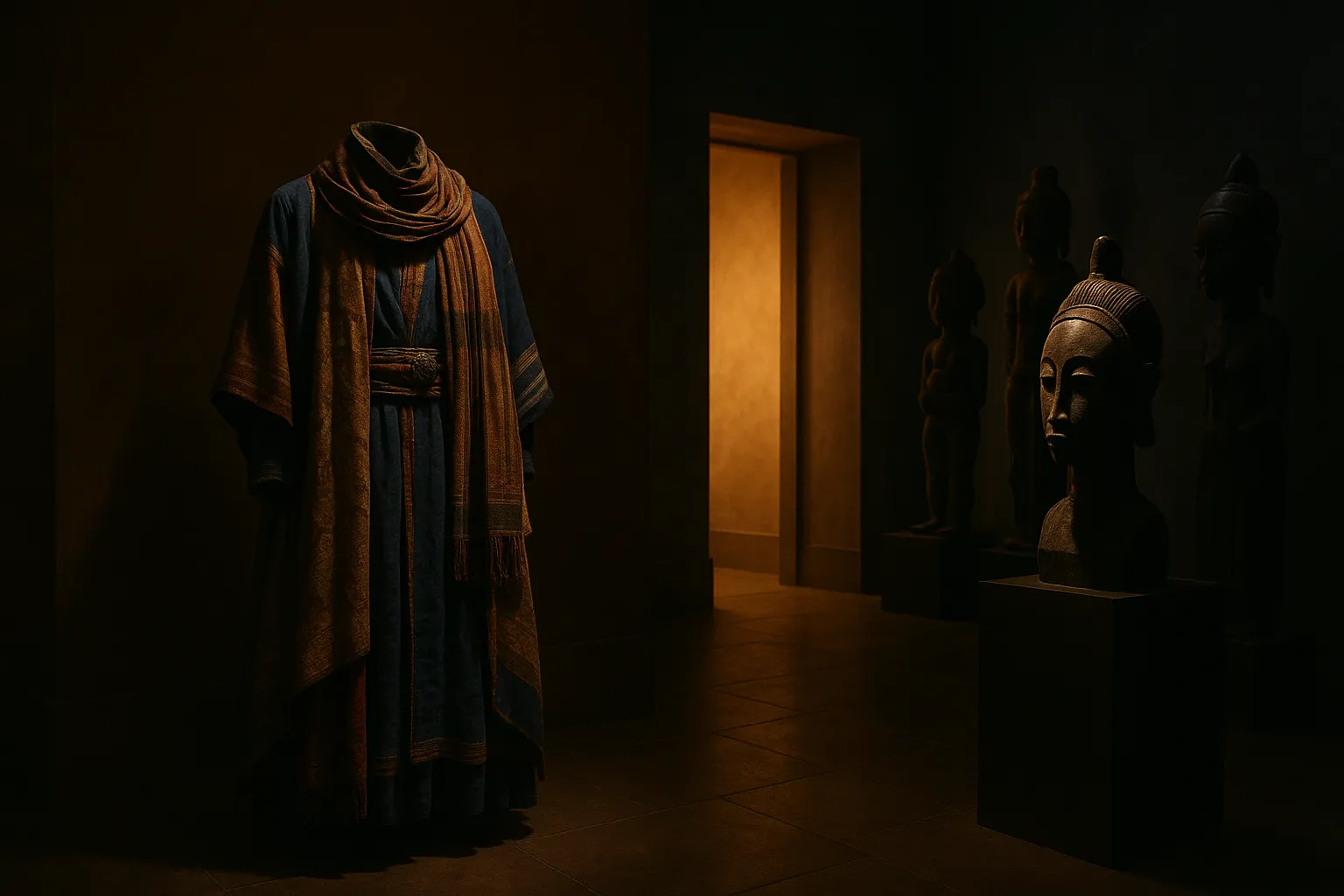
The Haggerty Museum of Art at Marquette University is presenting a museum-wide initiative titled The Otherworld is Home, a suite of free exhibitions and programs that span centuries and continents. Taking its cue from the Yorùbá proverb, “Life is a journey, the otherworld is home” (ayé l’àjò, ọ̀run n’ilé), the project considers personal reclamation, cultural identity, spiritual passage, and links across Africa’s many diasporas through three concurrent exhibitions and a robust schedule of related events.
Ancient Roots, Living Values
African Art: Ancient Roots, Enduring Values gathers more than 40 classical and neoclassical works and examines how traditional craftsmanship can serve as a conduit between the material and the spiritual. Guest curator and scholar of African and African diaspora arts Henry John Drewal frames the inquiry this way: “This exhibition and essay explore how, what, and why African works of art . . . work: how they move and affect us; what roles they perform; and the ways they may acquire different purposes, meanings, and values as they travel across oceans and cultural, political, and religious boundaries over time and space,” writes Drewal.
Contemporary Dialogues and Thresholds
In Iké Udé: Sartorial Anarchy, artist Iké Udé presents an ongoing photographic series of self-portraits that commingle garments and objects from disparate eras and geographies to unsettle familiar markers of cultural and individual identity. The Nigerian born artist, currently based in New York City, describes his approach: “In each image, I married disparate costumes from widely diverse traditions, countries, and time frames. And in mixing eras and cultures, I was able to bring harmony, as it were, to their similarly irreconcilable differences.”
Thresholds convenes the work of Aisha Tandiwe Bell, Portia Cobb, Stephen Hamilton, and Daniel Minter to probe the depth and complexity of Black cultural memory. Their practices operate along edges—between visibility and invisibility, the present and the ancestral, departure and arrival. Working across several media, the artists install their pieces alongside African works from the Haggerty’s collection to create a “call and response,” a participatory exchange in which one voice calls out and others answer in turn. Drawing on a shared, continuously unfolding memory—where the past remains active and unresolved—the exhibition becomes a site for inspiration, critical reflection, and renewal.
All three exhibitions are accompanied by a full slate of programs listed on the museum’s events page. For additional details, visit marquette.edu/haggerty-museum.