At the Watari Museum of Contemporary Art (Watari-um) in Tokyo, Nam June Paik: The 20th anniversary of his passing unfolds across three compact floors from Jul 19–Nov 23, 2026. Paik—widely known as the “father of video art”—left a prescient roadmap for the media-saturated present. In a 1974 essay, he wrote: “The mass entertainment TV as we see it now will be divided into, or rather gain many branches and tails of, differentiated video cultures, Picture-Phone, tele-facsimile. . . . They all will form a new nuclear energy in information and society-building.” Paik passed away in 2006; this exhibition asks how his insights read two decades on.
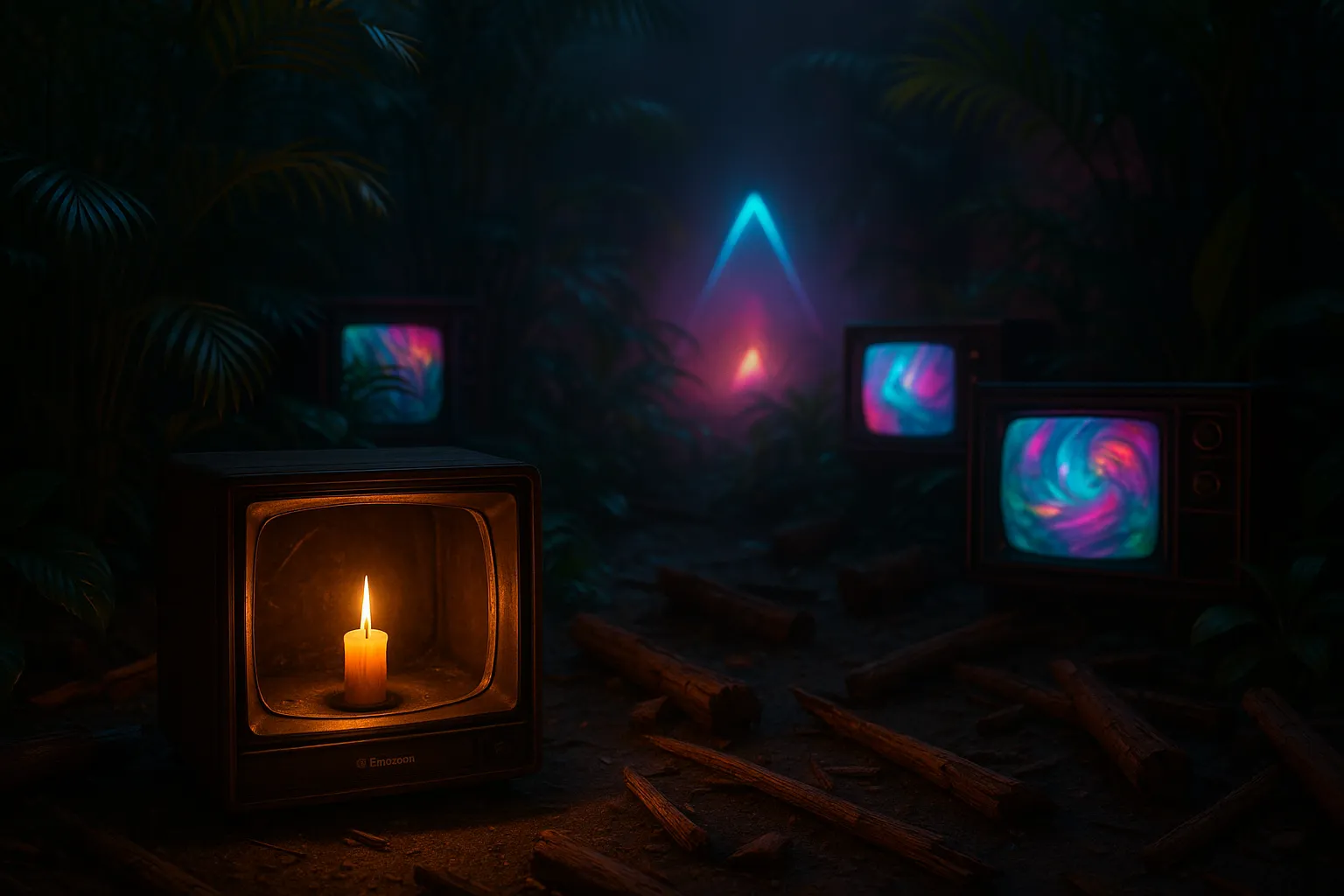
The survey draws from the museum’s collection with mixed-media installations, works on paper, and personal documents, building an immersive atmosphere from the ground floor up. Visitors first step into a dim den pitched between a lush forest and an abandoned broadcast studio: wood debris underfoot, tropical foliage unfurling, and retro TV sets appearing to sprout from the branches. Near the entrance, TV Egg (1982) sits on a mound of mulch ringed by ferns, its cathode-ray tube sending abstract moving images across the glass. The deceptively organic form nods to cosmogenesis and to the seductions—and misdirections—of technology. As one moves inward, a low thrum swells into an enveloping sound field of Zen Buddhist chanting, zither notes, audience laughter, and static. Some monitors carry black-and-white footage from Paik’s early 1960s Fluxus performances; others splice monks meditating before dawn into bursts of saturated color.
1993 at Watari-um, Revisited
Two works created for Paik’s 1993 solo show at Watari-um anchor this resonance between past and present. Time in Triangular (1993) riffs on the museum’s own architecture and New York’s Flatiron Building: neon tubes pick out a prow while screens sheath the walls, cycling clips from films and commercial TV distorted through a synthesizer. Nearby, Forest of Cage / Revelation of the Forest (1993) gathers 20-plus bulky TVs in a densely planted grove, each pulsing kaleidoscopic imagery. A descendant of TV Garden (1974–77), the piece salutes American composer John Cage (1912–1992), Paik’s friend and mentor. In this spirit, Paik elevated the glitch as creative tactic and political prod, needling the corporate grip of telecommunication systems and reminding viewers that the screen can be a manipulable—at times even “dictatorial”—medium.
The top floor turns quietly elegiac. Candle TV (1968)—a worn, hollowed-out Emerson set cradling a single flame—reads like a vigil for obsolete devices and the memories they once framed. It also opens onto larger questions the show raises about a world shaped by algorithms, cybernetic economies, and AI computing: what becomes of collective feeling under such intensities? Paik did not live to see all of these pressures, yet the exhibition keeps faith with his impulse to prod, tamper with, and disrupt the apparatus—if only to keep the human touch alive within it.