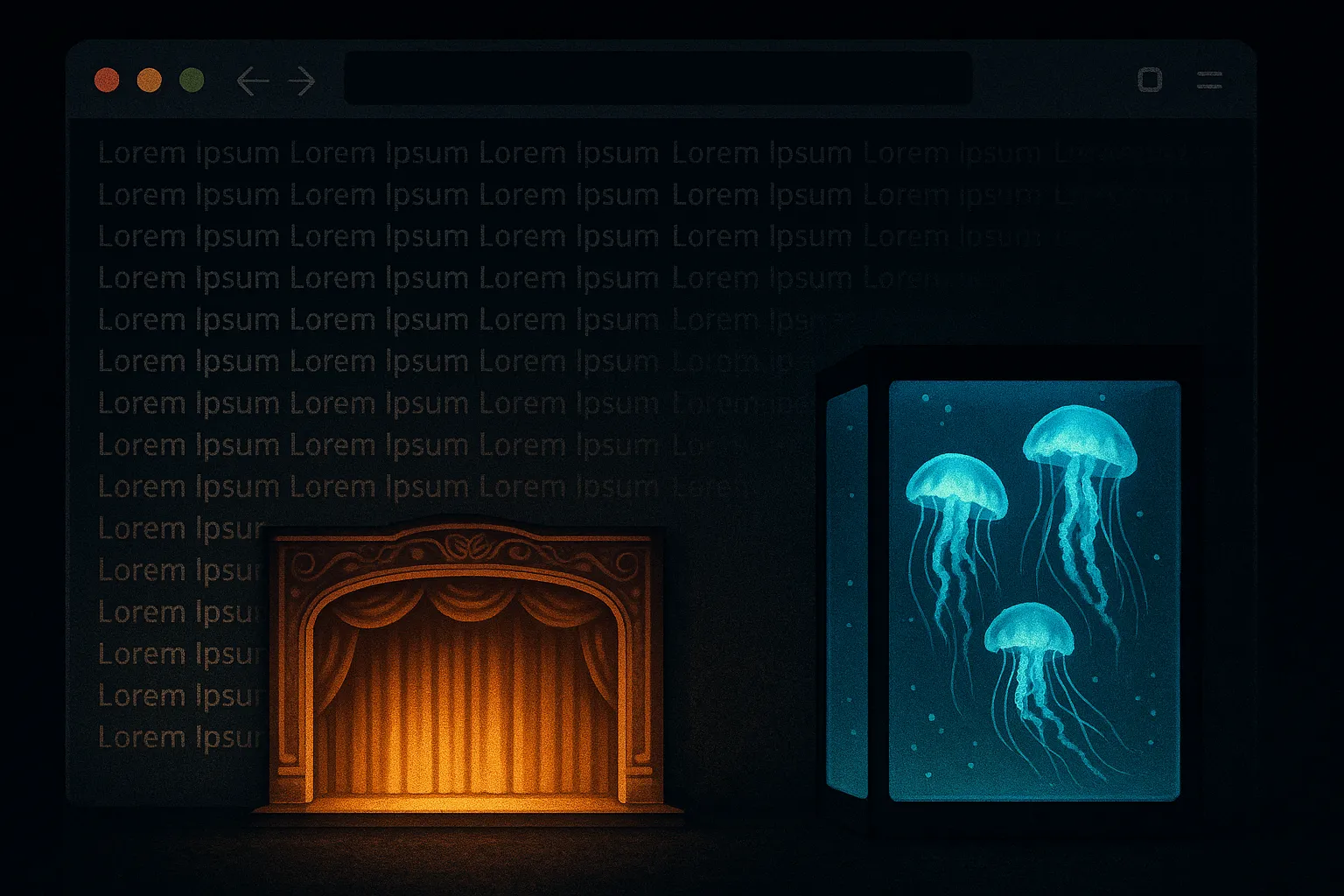
Two figures land with a thud: traffic to the ten biggest US news sites is down by a third in two years (Press Gazette), and more than a third of web pages published since ChatGPT launched bear signs of machine authorship (TechCrunch). The result is an internet swelling with unasked-for text and shrinking pools of readers to meet it.
Signals from the web
Distortion travels fast in that vacuum. A hoax insisting the Tang Dynasty never existed is finding real believers on the Chinese internet (CNN). It’s a glimpse of what happens when authority thins and noise thickens: history itself becomes negotiable.
There’s a countercurrent in the physical world. Hadestown — developed in front of live audiences for more than a decade before it neared a screen — just broke Hamilton’s box office records (IndieWire). Audiences didn’t discover it in a feed; they showed up, in person, over years.
Offline consequences, onstage and off
The balance sheet is mixed. ICA San Diego has laid off nearly half its staff (San Diego Union-Tribune), a stark reminder that cultural organizations feel the turbulence whether their work lives online or off. And a new study estimates the Paramount-Warner merger will cost Los Angeles 4,500 film and TV jobs (TheWrap), tying corporate consolidation to local livelihoods.
Amid the closures and cuts, there are unexpected openings. America’s first jellyfish museum has debuted in Pompano Beach, created by a Ukrainian couple who left their Kyiv one behind in 2022. Even as the web lurches between overproduction and abandonment, people continue to build places meant to be experienced — tanks glowing with life, stages humming with bodies, rooms designed for encounter rather than scroll.
The throughline is simple: where attention drains, consequences pool. Some stories evaporate into the feed; others are forged slowly, in rooms with doors. Culture is choosing its venues — and audiences are, too.
Vía artsjournal.com