Built throughout the 1960s and ’70s, the Aylesbury Estate in South East London once housed 11,000 residents. Long beset by violence and vandalism, the complex was slated in 2005 for phased demolition and rebuilding rather than rehabilitation. Against this backdrop, Harriet Mena Hill—who has lived and worked in South East London for nearly four decades—has been crafting a body of work that holds fast to everyday lives embedded in the estate’s fabric.
Soft Concrete: Portraits in Wool
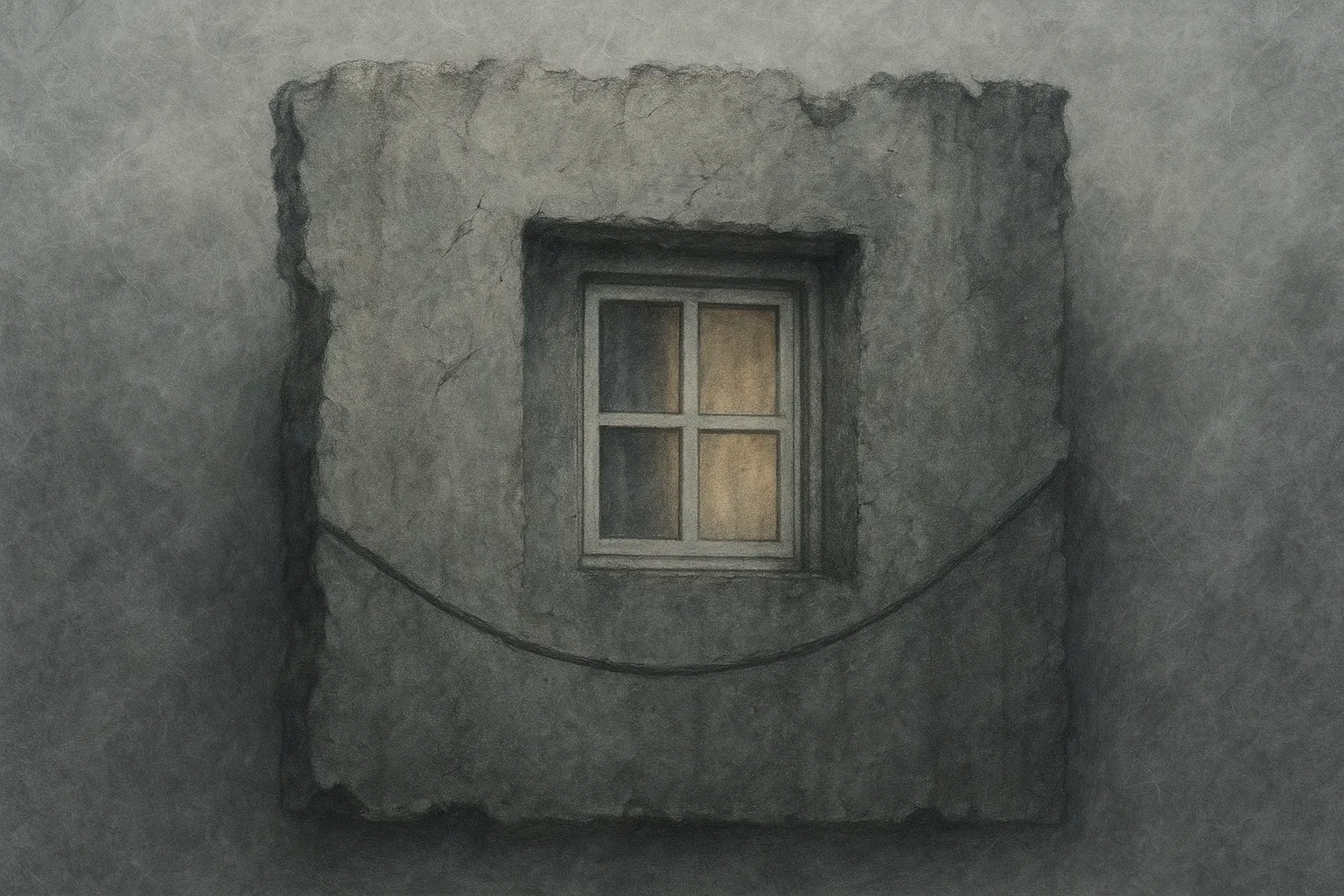
Hill’s deeper engagement began in 2018, when she was commissioned to teach a summer program for young residents. Out of that experience grew Soft Concrete, large textile portraits that recast the estate’s architecture and surfaces in fiber. Blending dyed wool roving, she delineates windows, shapes bowed electrical wires, and even mimics graffiti spray-painted on exterior walls. One work, Soft Concrete Missenden, Aylesbury Estate (2020), is wool on felt, measuring 88 x 118 centimeters.
The series, Hill says, was a “repositioning of how the estate is perceived. Historically, it has been widely portrayed in the media as violent and intimidating, as a place without hope.” In contrast, Soft Concrete “presents the estate as a place of living and community. From a distance, the portraits look like photographs or realistic paintings, but on closer inspection, the material reveals itself to be wool, hand blended for subtle colour mixing used to depict small active details of domestic life.”
The Aylesbury Fragments: Painting on Rubble
When demolition accelerated in 2020, Hill began collecting fragments of concrete from the site. “It was a direct response to the situation of residents who were required to stay at home as the demolition of adjoining blocks, the homes of their former neighbours, continued throughout lockdown, in spite of wider restrictions,” she says. Before the buildings came down, several tenants had argued for renovation instead of demolition. In a 2023 BBC interview, long-time resident Aysen Dennis, rehoused in central London after 30 years on the estate, reflected: “The council gave me everything I asked for. It’s on a high floor. There’s lots of light. I can see the park,” Dennis said. “But it’s not my home.”
Hill’s intimate paintings on salvaged concrete form the ongoing series The Aylesbury Fragments. Glimpses of hallways and pockets of windows are literally framed by ragged edges of stone, capturing run-down infrastructure left standing during the phased reconstruction. Although regeneration began in 2013, it remains less than half complete. Hill has made more than 150 paintings to date and lets unpainted pieces sit for months, sometimes years, before working. As long as construction continues, she intends to add to these small tributes to a community once housed within those walls.
Hill has exhibitions slated for London and across the U.K. throughout 2027.