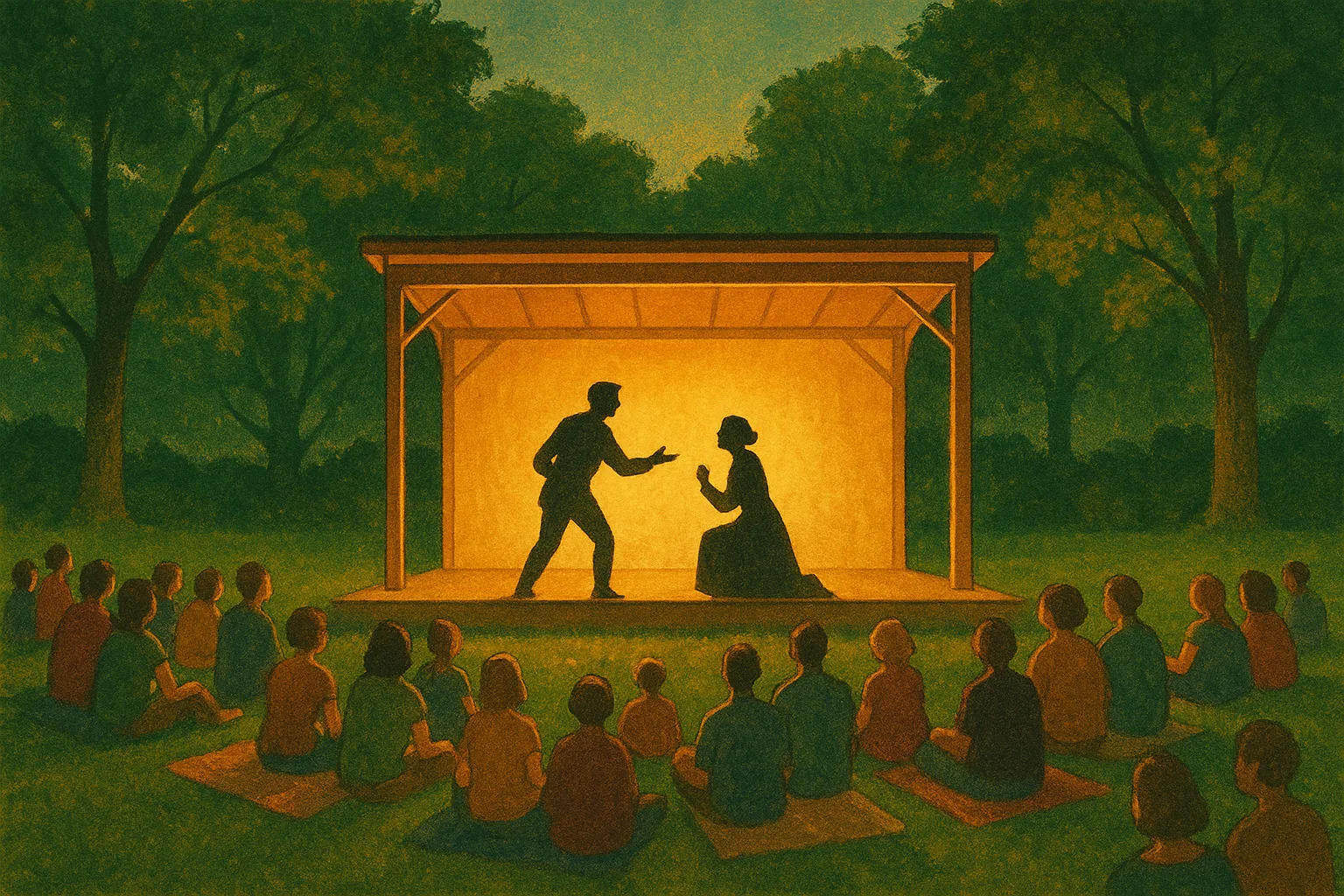
In Prospect Park this month, thousands of New Yorkers have paused their strolls and gathered to watch Molière under the open sky. The latest production from Molière in the Park—Don Juan—unfolds in a temporary outdoor theatre where admission is free and the audience spills across the lawn. Some arrive as devoted theatregoers; many simply happen upon the stage and decide to stay. The scene encapsulates a simple proposition: excellent theatre should be accessible to everyone, regardless of what they can afford.
A park model for culture
Founded in 2018 by Lucie Tiberghien, Molière in the Park was built on offering professional productions of Molière’s 400-year-old plays at no cost to the public. Tiberghien argues that we should think about access to culture the way we think about parks. Everyone can enter Prospect Park, benefit from the painstaking design and construction that made it possible, and from the millions of dollars invested year after year to care for it. Keeping a park free doesn’t make it free to maintain; it signals a collective decision that its value should not depend on an individual’s ability to pay. Beautiful, well-kept parks correlate with thriving communities; they make residents feel worthy and cared for by their city.
By the same logic, making theatre free does not reduce the cost of creating it. The work still demands extraordinary actors, ambitious designs, and rigorous engagement with the text—expertise that requires resources. For the past five years, Tiberghien has directed these productions in collaboration with actors, designers, composers, and theatre artists, holding artistic standards high while removing the barrier of ticket price.
Why Molière, and why rigor matters
Tiberghien sees Molière as uniquely suited to this mission. The more professional skill and discipline brought to the plays—their context, rhythms, and the seriousness of their satire—the more resonant they become. With Molière, artistic excellence increases accessibility. As the 20th-century French actor and director Pierre Dux observed, Molière’s enduring relevance lies in “ce comique profondément humain,” a profoundly human comedy that invites spectators to recognize themselves, their friends, and their enemies onstage.
That recognition is on full display in Don Juan, where we meet “the man of enormous charm and privilege who is convinced that the rules governing everyone else do not apply to him.” When tickets are free, people come; when the work is rigorous, the centuries-old plays do their work once the audience arrives.
Back in Prospect Park, the equation is clear: we invest in parks because open, well-tended beauty strengthens communities. Tiberghien makes the same case for culture. Free access to excellent art requires talent, expertise, care, and significant resources—and, like parks, supporting it is an investment in the health and well being of the city. In this season’s gathering of thousands, that investment looks like neighbours laughing together at Molière, on the grass.
Kaliswa Brewster and Keeshav Moodliar appear in Don Juan, a production of Molière in the Park at Prospect Park.