How do artists and audiences navigate mastery and meaning right now? A cluster of recent stories poses that question from several angles: the classroom, the newsroom, the concert hall, the store shelf, and even the streaming pipeline.
Training under pressure, and the vanishing on-ramp
Classical music education still leans on a teacher–student hierarchy, and a report in The New York Times argues that deference within that setup is harming the people it intends to turn into musicians. The shift in emphasis isn’t about tallying villains; it’s about asking what aspiring artists should be expected to surrender in the name of craft.
Right next door, the path gets murkier for writers. As Fast Company notes, young writers are seeing the small, unglamorous, paid assignments that once built skills get absorbed by machines before anyone earns a first byline. Historically, those low-paid, low-prestige gigs doubled as training grounds. They’re also the first targets of automation.
Labor stakes and audience choices
At the far end of the expertise spectrum, musicians at the Boston Symphony have voted to authorize the first potential strike in the orchestra’s history, according to WGBH. However that vote resolves, it underscores how questions about value and working conditions are now squarely on the table in elite cultural institutions.
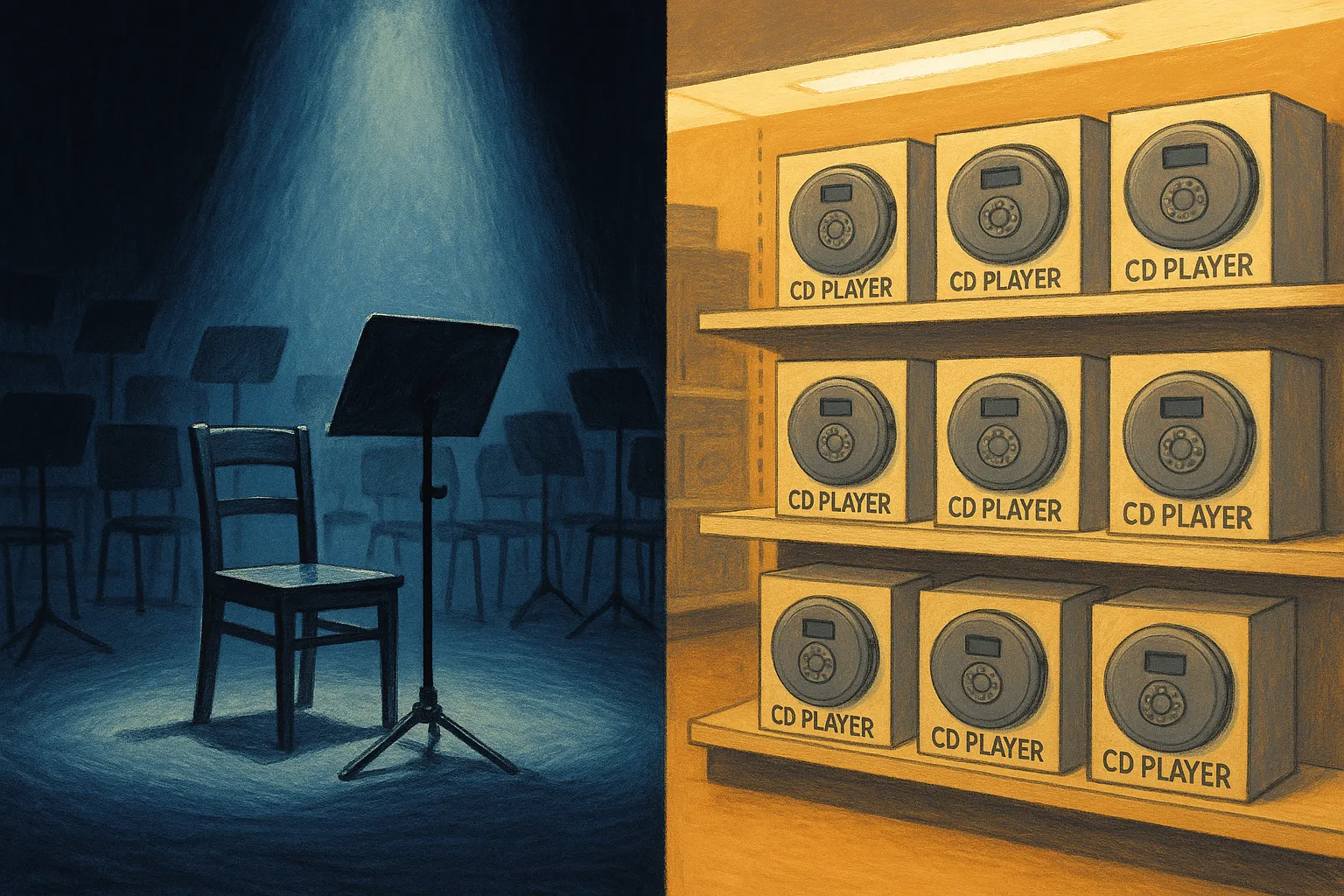
Audiences, meanwhile, continue to signal their preferences in tangible ways. The Guardian reports that young buyers are pushing CD players back into stores, a small but telling countercurrent to all-digital consumption. And as Slate observes, country’s surge on the Billboard charts owes largely to the fact that it’s a genre people still purchase on purpose rather than absorb passively.
Not every twist fits neatly into a trendline. MSN reports that the LAPD is investigating a Nicolas Cage movie that went missing at Netflix. In an era obsessed with frictionless access, the idea that an entire film could simply vanish feels both absurd and oddly emblematic of the fragility behind the screens.
Taken together, these snapshots sketch a cultural field renegotiating the terms of entry, the price of excellence, and the pleasures of ownership. Whether in the studio, the newsroom, the orchestra pit, or the checkout line, the same dilemma recurs: what’s worth giving up—and what’s worth holding onto.
Vía artsjournal.com